Model Context Protocol (MCP): The New Standard for AI Tool Access
By Darus S Alfatah · 2026-10-28 · Berita AI · 10 menit
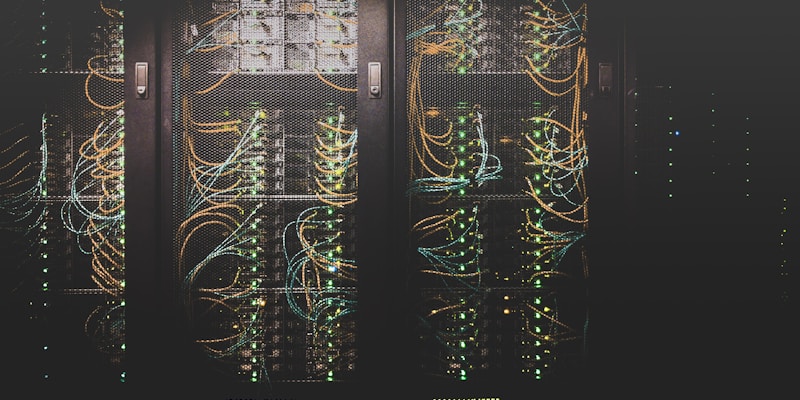
Author note: MCP simplifies tool integration, but each tool still needs strict permissions.
The Old Problem: Every AI App Needed Its Own Integration
Before a standard existed, connecting an AI model to internal systems meant rewriting the integration layer for each client: one implementation for the IDE, another for the web chatbot, another for automation agents. Every client had a different tool format, authentication approach, and conventions. Integration became repeated work that added no product value.
Model Context Protocol (MCP) solves this. The idea mirrors LSP in the editor world: one open protocol, many implementations. Build one MCP server for your system and any MCP-capable client can use it without extra integration code.
How MCP Works
MCP separates two roles: host/client (the AI application the user runs) and server (the capability provider). Servers expose three primitives:
- Tools — functions the model can call, with a JSON input schema.
- Resources — readable data (files, documents, database records) addressed by URI.
- Prompts — ready-made instruction templates users can choose.
Transport is simple: stdio for local processes, HTTP/SSE for remote servers. Authentication usually follows existing OAuth or API key mechanisms on the server side.
Why Developers Care
First, reusability: one MCP server for a warehouse system can serve an IDE, an internal chatbot, and a reporting agent. Second, measurable security: capabilities are explicit, so you can grant read-only access to one server and limited write access to another.
Third, model portability. MCP is not tied to one vendor. Any model — including through a gateway like BankAI — can use the same tools, which lowers lock-in risk.
Risks and Mitigations
- Tool poisoning — tool descriptions containing hidden instructions. Review third-party servers manually.
- Over-broad permissions — servers with full production database access. Use read-only credentials and per-table scoping.
- Local code execution — local servers can run shell commands. Run them in a sandbox or container.
- Data exposure — sensitive data sent as context. Redact PII before sending, or use on-premise models.
Getting Started
Pick a narrow, valuable case: an MCP server that only exposes product search and order status for customer service. Measure response time and resolution rate. Once stable, add write capabilities with human approval.
For teams in Indonesia, MCP opens an opportunity to build connectors for local POS systems, cashier apps, or banking APIs. Because the protocol is open and lightweight, initial development cost is small compared with bespoke per-client integrations.
Conclusion
MCP could become the standard layer connecting AI to real systems, much as HTTP connected the web. Learning it now prepares developers for a shift from "write custom integration code" to "install an existing server".
Sources & References
- modelcontextprotocol.io — specification and SDKs.
- Anthropic — Model Context Protocol.
Practical Adoption Questions
Does MCP replace plain function calling? No. MCP standardises how capabilities are exposed so many clients can reuse them. For a single internal app, ordinary function calling remains simpler.
How do we test an MCP server? Start read-only over stdio and log every call. Add write capabilities only after the read path is stable, and require human approval for anything destructive.
An example of strict permission: A file-read tool may access only one folder; a send-email tool requires confirmation. The least-privilege principle still applies.
Frequently Asked Questions
Does this news stay relevant over time?
AI moves fast; this article gives context and principles that remain useful, and is updated when important developments happen.
How do I keep up with the latest AI news?
Follow the BankAI blog and the model catalog on the AI Models page, updated with available models.
Do these developments affect developers directly?
Many affect model choice, cost, and integration — all covered from a practical angle.